
McLennan Release Dates Compared
A projected release date is a current estimate for a sentenced person. TDCJ calculates it from the sentence, applicable time credits, parole or mandatory-supervision rules, and information in its records. A scheduled release date appears later, after release processing has advanced. The actual release date records an event that occurred. Those labels should never be blended. TDCJ warns that a scheduled date can change without notice, even on that date.
County custody works differently. A pretrial detainee at McLennan County Jail may leave after bond, dismissal, a personal-recognizance order, or another court-authorized event, but there may be no computed release date in advance. A person serving a county sentence may have an end date tied to the judgment and lawful credits. Sheriff Records and the court are the right sources. The TDCJ search does not confirm a county-only release.
Find McLennan Projected Release Dates
Start with the last custodian. McLennan County Sheriff records a county booking. TDCJ controls a state-prison sentence. BOP controls a federal sentenced prisoner, while ICE maintains its own detention record. A move from the county jail to one of those systems is a transfer, not community release.
- Match the person and case. Use the full name, date of birth, CID, TDCJ number, SID, or cause number that the official source accepts.
- Check county status. Use the Sheriff gateway and timestamped Current Inmate Listing only to see present county custody.
- Read the court event. Search the McLennan Case Index for bond, judgment, sentence, dismissal, revocation, or release orders.
- Check a state sentence. Open the TDCJ Online Inmate Search, select the correct person, and retain the exact label and retrieval date.
- Confirm the outcome. Ask Sheriff Records for the release-or-transfer entry, or use TDCJ and IVSS for a state-prison actual release.
The county search and records path is covered more fully on the McLennan County released inmates home page. A name missing from the hourly roster does not supply a date or destination. It can reflect transfer, court movement, lag, or a data change.
TDCJ McLennan Release Date Fields
The TDCJ detail record includes location, offenses, and a Projected Release Date. Once processing is complete, TDCJ instructions also describe a Scheduled Release Date and Scheduled Release Location. A missing scheduled field means release has not yet been scheduled. It does not prove that parole was denied or that the maximum sentence will be served.
| Field | What it establishes |
|---|---|
| Projected Release Date | A conditional calculation based on current sentence and credit data. |
| Scheduled Release Date | An operational plan after release processing, still subject to change. |
| Scheduled Release Location | The planned TDCJ release site, not a county jail exit point. |
| Actual Release Date | A completed TDCJ custody event when IVSS displays it. |
| Parole review information | A decision stage or next review, not proof of physical departure. |
If the online record is unavailable or no longer preserves an older discharge, TDCJ accepts email inquiries. Send the full name and seven-digit TDCJ number to pia@tdcj.texas.gov. If the number is unknown, provide exact date of birth, or an approximate age and county of conviction. TDCJ says this channel has no charge and can provide projected release and prior incarceration information, but not photographs or Social Security numbers.
Texas Release Credit Rules
Texas Government Code Chapter 498 governs good-conduct time for eligible TDCJ prisoners. Credit classification and forfeiture can affect calculations, but good time does not reduce the sentence itself. It may affect eligibility for parole or mandatory supervision as the governing law allows. Government Code Chapter 508 controls parole and mandatory supervision. Offense date, offense type, sentence facts, and statutory exclusions matter.
There is no sound basis for a blanket claim that every Texas prisoner serves 85 percent. Texas uses offense-specific frameworks. Government Code section 508.145 and Code of Criminal Procedure Article 42A.054 are key sources, but exceptions and older offense-date rules prevent a safe person-specific estimate from a simple percentage. The official TDCJ field is more useful than an informal calculation.
County time cannot be estimated by copying a TDCJ credit rule. A McLennan judgment identifies the term imposed, while jail records document the custody period and booking-out event. Pretrial credit, concurrent or consecutive terms, and a later court correction can affect the official result. Obtain the judgment and current custody record instead of subtracting dates from an arrest entry.
Parole eligibility is also not the same as a projected departure date. The Board can approve, deny, or set another review, and some favorable codes require a program or release plan. Review and Release Processing handles the operational stage after approval. IVSS then provides the stronger retrospective field when an actual TDCJ release has occurred.
- Good-conduct time
- Credit earned under state rules that may affect eligibility and a projected calculation.
- Parole
- Conditional release approved by the Board before the sentence expires.
- Mandatory supervision
- A statutory form of release that may still require Board review or may be excluded.
- Maximum expiration
- The sentence end shown after applicable calendar time and official calculations.
Why McLennan Release Dates Move
A changed date is not, by itself, an error. TDCJ may receive new sentence data, audit time credits, apply a Board decision, account for a required program, or respond to a new detainer. Preserve the former field label and the date it was viewed. Then compare the current official record rather than relying on a saved estimate alone.
| Change | Possible effect |
|---|---|
| Credit forfeiture or restoration | The projected calculation may move later or earlier. |
| Parole or mandatory-supervision action | Approval, denial, or later review can alter the path and timing. |
| Program or plan requirement | Some favorable Board codes require completion or approval before release. |
| Detainer or another commitment | Exit from one custodian may lead to transfer rather than freedom. |
| Court order or corrected sentence data | TDCJ or the county may recalculate after receiving the legal record. |
For parole status before a Board vote, TDCJ directs callers to 844-512-0461. After approval, Review and Release Processing uses 512-406-5202. General locator help is available at 936-295-6371 or 800-535-0283 on weekdays from 8 a.m. to 5 p.m. Provide the TDCJ or SID number, or exact birth date.
When Texas Release Dates Shift
Texas has a distinctive mandatory-supervision effect. TDCJ defines a projected date as the date a person is expected to be released if not paroled. If discretionary mandatory supervision is denied for an eligible post-1996 case, the projected date may move to maximum expiration. A later approval may cause another calculation and move the date earlier.
Release hours must also stay custody-specific. TDCJ says ordinary state releases take place from 8 a.m. to 5 p.m. on weekdays, excluding holidays. Research found no general rule requiring McLennan County Jail to release people early because an end date falls on a weekend or holiday. State prison practice cannot be imported into county jail predictions.
The TDCJ release FAQ also warns that scheduled dates and locations may change. The official workflow shown there is a state process, and it supports follow-up with Release Processing when a date is near.
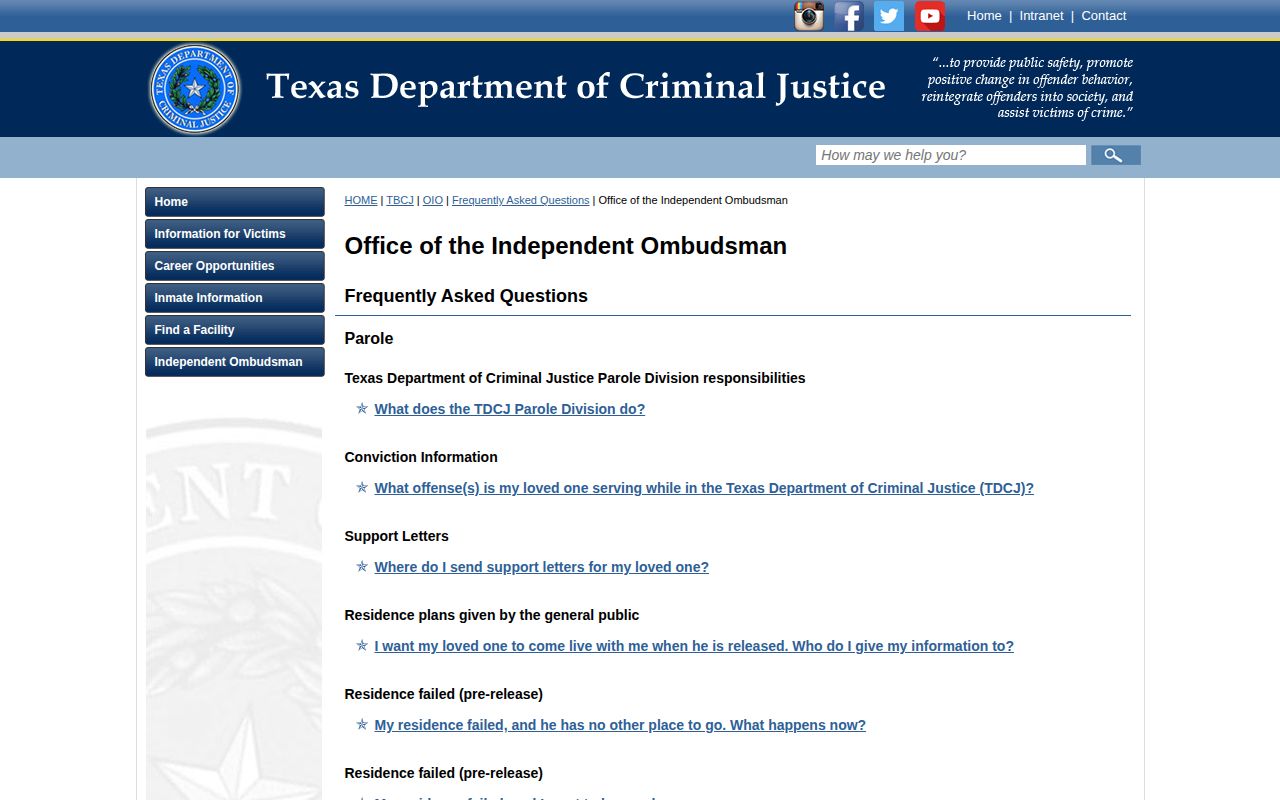
The captured state page reinforces why a scheduled field should be treated as a current plan rather than a guaranteed McLennan County release event.
A county sentence does not create a TDCJ date. Use the judgment, Sheriff record, and jail register. A later TDCJ commitment begins a separate state timeline.
Confirm McLennan Actual Release
For a county booking, request the permanent jail-register entry and the booking-out or release sheet through Sheriff GovQA. Ask for the existing release-or-transfer date, the type and destination if maintained, and the exact booking episode. Texas Local Schedule PS requires the jail register to contain a release or transfer date and keeps that register permanently. The legal authority may be in the matching court docket.
For a state prisoner, compare TDCJ with IVSS. IVSS distinguishes Expected Release Date from actual Release Date, if released. That makes the latter a stronger retrospective state-release record. It still says nothing about a person whose only custody was McLennan County Jail. The McLennan County VINELink Check explains the local participation check and the confirmed IVSS notification path.
When the county court signs a bond or release order, processing may still be under way and another hold may remain. The docket proves the legal event, while the jail register records the physical custody event. Report both dates with their labels if they differ. For an older TDCJ episode, use the email history channel when the live person search no longer supplies enough detail. A federal result must be checked through BOP, and an immigration event through ICE, because neither belongs in a Texas or McLennan calculation.
Note: A release date from one agency does not rule out transfer, another hold, or supervision by a different authority.